PPF vs. Road Debris: Real-World Tests on How Well It Protects Your Paint

May 26, 2025
Introduction

If you’ve ever inspected your vehicle after a road trip and spotted tiny chips, scratches, or mysterious scuff marks, chances are you’ve been on the receiving end of road debris. From loose gravel to sand, salt, or even rubber fragments, these hazards are constantly lurking on highways, construction zones, and rural backroads. While a quick car wash might remove the dirt, it won’t fix the long-term damage debris can cause to your vehicle’s paint. That’s why more drivers are investing in Paint Protection Film (PPF) as a front-line defense.

But does PPF really hold up under real-world conditions? Can it protect your car from the relentless assault of everyday driving hazards?

In theory, PPF is designed to serve as a sacrificial barrier—absorbing impact from debris and preventing scratches and chips from reaching your paint. It sounds good on paper, but for many car owners, the real question is how well it performs outside the shop , in daily commutes and long-distance drives.

With more drivers searching terms like “does PPF stop road rash,” “real-world PPF test,” or “PPF vs. road debris,” it’s clear there’s growing interest in how this protection holds up beyond controlled environments.

In this article, we’ll break down the science behind PPF, explore how it performs in both lab simulations and on actual roads, and take a close look at whether the results match the promise. From coverage areas to long-term durability, we’ll help you understand if PPF truly lives up to the hype—and if it’s worth the investment for your driving needs.

By the end, you’ll have a clearer picture of what PPF can (and can’t) do when it comes to real-world debris protection.

Understanding Road Debris: Common Threats to Your Car’s Paint

Every time you drive, your vehicle is exposed to more than just sunlight and rain—it’s also up against an invisible army of road debris. These seemingly minor elements can have a major impact on your car’s paint, leading to chips, scratches, dulling, and even corrosion over time. To understand how effective PPF is, it’s important to first know what your car is up against on a daily basis.

Gravel and Loose Stones are among the biggest offenders, especially on highways, rural roads, or near construction zones. These small rocks are often kicked up by the tires of surrounding vehicles and can hit your car with surprising force, leaving behind rock chips—tiny but permanent blemishes in your paint.

Sand and Dust might seem harmless, but these fine particles can be abrasive. When they stick to your car’s surface and are rubbed during washing or even by wind movement, they can create micro-scratches that dull your paint over time.

Salt and De-icing Materials are seasonal threats in colder climates. While they help keep roads safe in winter, they’re highly corrosive to vehicle paint and metal. When combined with moisture, they accelerate rust formation—especially on exposed or chipped areas.

Tire Rubber, Plastic, and Asphalt Particles can also be flung onto your vehicle from other cars, particularly in hot weather or on freshly paved roads. These sticky elements not only mar your paint but can be difficult to remove without causing further damage.

Bug Splatter and Bird Droppings may not technically count as “road debris,” but they’re common during travel and equally harmful. Both are acidic and can etch into paint if left untreated.

In the next section, we’ll examine how Paint Protection Film (PPF) is engineered to combat these threats—both in theory and in real-world conditions.

What Makes Paint Protection Film (PPF) Special?

Paint Protection Film (PPF) stands out in the world of vehicle preservation because it offers more than just a shiny finish or water repellency—it delivers real, physical defense against harsh elements and road debris. But what exactly makes PPF so effective and different from other types of protection?

First and foremost, PPF is a multi-layered polyurethane film , typically measuring between 6 to 10 mils thick. This flexibility and thickness give it the ability to absorb impact from flying debris, such as gravel or asphalt, without transferring that damage to your vehicle’s paint. It acts as a sacrificial barrier—taking the hit so your car doesn’t have to.

One of PPF’s most impressive features is its self-healing technology . Made possible by elastomeric polymers, the film can “heal” minor surface scratches and swirl marks when exposed to heat, whether from the sun or warm water. This helps your car maintain a fresh, smooth appearance long after installation.

PPF also resists UV radiation, chemical stains, and moisture intrusion . This means it not only blocks road debris but also prevents long-term paint degradation from environmental exposure—something traditional waxes and even ceramic coatings can’t fully achieve on their own.

Another unique benefit is its optical clarity . High-quality PPF is virtually invisible, preserving your car’s original paint color and gloss. Whether applied to a front bumper, hood, mirrors, or the entire vehicle, it blends seamlessly into the surface.

Finally, many PPF products come with warranty-backed durability , ranging from 5 to 10 years depending on the brand and installer. That kind of long-term protection adds serious value for car owners looking to maintain both appearance and resale potential.

Up next, we’ll dive into real-world tests and case studies that show just how well PPF performs against actual road debris.

Simulated Impact: How PPF Performs in Controlled Tests

To truly understand how well Paint Protection Film (PPF) defends against road debris, many manufacturers and independent detailers conduct simulated impact tests . These controlled environments replicate the real-world conditions that vehicles face—like gravel strikes, sand blasts, and debris impact at highway speeds—to evaluate how PPF holds up under pressure.

One common test involves shooting small stones or metal pellets at panels with and without PPF using compressed air cannons. The results are clear: paint protected by PPF consistently shows little to no damage, while unprotected panels reveal chips, scuffs, or even exposed primer. The PPF absorbs and disperses the energy of the impact, preventing it from reaching the underlying paint.

Another test often used is the sandblasting abrasion simulation , where panels are exposed to high-velocity sand for a set duration. PPF-covered panels may show dulling or minor surface marks on the film itself, but the paint underneath remains untouched. In contrast, bare paint can suffer from permanent scarring and clear coat erosion.

Heat testing is also used to demonstrate PPF’s self-healing capabilities . Scratched film is exposed to hot water or a heat gun, and within seconds, surface-level swirls disappear, restoring a smooth finish. This is especially useful for resisting daily micro-abrasions caused by dust, road grime, and automated car washes.

These simulated tests aren’t just for show—they help reinforce the practical durability of PPF in everyday driving. Whether it’s a pebble launched at 65 mph or a swirl mark from a roadside car wash, PPF is built to take the hit so your paint doesn’t have to.

In the next section, we’ll explore real-world examples from car owners and professionals who’ve put PPF to the test on actual roads.

Real-World Driving Conditions: What Happens on the Road?

While lab tests provide valuable insight into how Paint Protection Film (PPF) handles impact, the real test lies in how it performs in everyday driving conditions. From pothole-ridden streets to long highway commutes, vehicles are exposed to a constant barrage of hazards—and PPF proves its worth where it counts most: on the road.

Drivers who frequently commute on highways often report that front-end damage is drastically reduced after PPF installation. Areas like the front bumper, hood, fenders, and side mirrors—which are typically peppered with rock chips—remain smooth and unblemished even after thousands of miles. This is especially true in regions with frequent road construction or harsh winters, where sand, gravel, and salt are constantly kicked up from the pavement.

One real-world example comes from fleet vehicles and rideshare drivers who put on hundreds of miles a day. These cars, usually exposed to the worst road conditions, show significant paint preservation over time when equipped with PPF. Even in high-traffic urban environments where close-quarter driving increases the risk of scrapes and dings, the film helps absorb light impacts and resists scuffs.

In rural areas, drivers often deal with loose gravel roads , farm debris, and muddy trails. Vehicles with PPF tend to avoid the common “sandblasted” look along the rocker panels and lower doors—areas most susceptible to daily abuse.

Another key benefit that shows up in real-world use is PPF’s ease of maintenance . Mud, bugs, and tar are easier to clean off, and the film’s hydrophobic properties often repel dirt better than untreated paint.

Overall, from daily drivers to off-road adventurers, PPF offers a layer of defense that holds up in unpredictable, real-life scenarios—protecting paint and preserving vehicle value across all terrains. Next, we’ll look into how PPF stacks up when dealing with specific types of road debris.

Areas Most Vulnerable to Damage and How PPF Holds Up

When it comes to road debris, not all parts of your vehicle are equally at risk. Some areas take more abuse than others, and that’s where Paint Protection Film (PPF) shines the brightest. Understanding which zones are most vulnerable helps you choose targeted coverage that maximizes protection—and your investment.

  1. Front Bumper and Hood
    These are the first points of contact for airborne debris, especially at highway speeds. Rocks, sand, and bugs are frequently hurled toward the front end, making it the most common site for paint chips and scratches. PPF applied here acts as a sacrificial layer, absorbing impact and preventing damage to the original paint. Many drivers opt for full hood coverage to avoid the visible “line” left by partial wraps.

  2. Side Mirrors and Fenders
    Mirrors protrude and are highly susceptible to impacts from flying gravel or debris kicked up by neighboring cars. Fenders, especially the lower sections, take hits from tires—your own and others—sending up everything from small stones to road salt. PPF’s flexibility allows it to wrap tightly around these curved and complex areas, maintaining full coverage without bubbling or peeling.

  3. Rocker Panels and Lower Doors
    Vehicles in rural or off-road environments often suffer from abrasion along the sides. Dirt, grit, and gravel cause a “sandblasting” effect over time. High-quality PPF, especially when applied to rocker panels and door bottoms, helps prevent paint erosion in these high-wear zones.

  4. Rear Wheel Arches and Trunk Ledges
    Road spray from the rear tires and repeated loading/unloading from the trunk can cause scuffing and chipping. PPF adds a discreet but strong shield in these locations.

In all these vulnerable areas, PPF not only resists impact but also helps maintain a like-new finish—making your car easier to clean and more appealing at resale.

Does All PPF Perform the Same in Real-World Tests?

While Paint Protection Film (PPF) is widely recognized for its ability to defend against road debris, not all PPF products perform equally in real-world scenarios. From material composition to thickness and installation technique, several factors influence how well PPF actually protects your vehicle once it’s out on the road.

  1. Thickness and Composition Matter
    Most automotive PPF ranges from 6 to 10 mils in thickness. Thicker films generally offer better impact resistance, especially against high-speed gravel and larger debris. However, if the film lacks elasticity or quality polymers, it might still tear or puncture upon impact. In real-world tests, high-quality films with self-healing, multi-layered construction consistently outperform budget or entry-level options.

  2. Brand and Technology
    Leading PPF brands invest in advanced technology—like self-healing top coats, hydrophobic surfaces, and UV resistance—to ensure their films last longer and maintain clarity. These premium features don’t just improve appearance; they also enhance performance against repeated wear and tear. In contrast, cheaper films may yellow, haze, or degrade faster, reducing both aesthetics and protection.

  3. Installation Quality
    Even the best PPF will underperform if poorly installed. Wrinkles, trapped air bubbles, or exposed edges can compromise coverage and make the film more likely to peel or lift. In real-world tests, vehicles with professional, edge-to-edge installations fare significantly better over time than those with rushed or DIY jobs.

  4. Environmental Stress
    Performance also varies depending on driving conditions. Daily exposure to sun, dirt roads, rain, or salted highways can test a film’s endurance. In consistent side-by-side comparisons, top-tier films like XPEL, 3M, and SunTek generally hold up better under these conditions than lower-end alternatives.

In short, not all PPF is created equal. Choosing a high-quality product and certified installer is key to maximizing your protection in the real world.

Combining PPF with Other Products: Does It Make a Difference?

While Paint Protection Film (PPF) is a strong standalone defense against road debris, its effectiveness can be enhanced when paired with complementary products like ceramic coating and high-quality window tint. Together, these upgrades work to provide a full-spectrum protection package that shields your vehicle from both physical and environmental damage.

  1. PPF + Ceramic Coating: A Perfect Pairing
    Ceramic coating doesn’t offer impact resistance, but it excels in chemical protection. When applied over PPF, it adds a hydrophobic layer that repels water, dirt, and grime—making your car easier to clean and maintain. It also adds depth and gloss to your finish without interfering with PPF’s flexibility or clarity. In real-world use, this combination helps preserve both the film and the vehicle’s paint by reducing the buildup of contaminants that can degrade surfaces over time.

  2. Added UV and Interior Protection
    Combining PPF with window tint—especially ceramic or carbon-based films—can offer additional protection inside the vehicle. High-performance tints block up to 99% of UV rays, helping to reduce interior fading and lower cabin temperatures. This synergy ensures that both your exterior and interior remain in better condition longer, which is especially valuable in hot or sunny climates.

  3. Long-Term Savings and ROI
    Bundling PPF with ceramic coating and window tint may require a larger upfront investment, but it often leads to long-term savings. Fewer paint corrections, lower detailing costs, and better resale value are among the returns many vehicle owners report after going all-in on protective upgrades.

So, does combining PPF with other products make a difference? Absolutely. While each serves a unique purpose, together they offer a more complete, long-lasting defense against the everyday threats your vehicle faces on and off the road.

Maintenance After Exposure: What Does PPF Look Like Over Time?

Paint Protection Film (PPF) is designed to be a long-term investment—but like any protective product, its appearance and performance can change over time depending on how well it’s maintained and the conditions it’s exposed to. After years of shielding a car from road debris, UV rays, moisture, and grime, how does PPF actually hold up?

  1. Visual Appearance Over Time
    High-quality PPF is built to stay clear and glossy, but prolonged exposure to the elements—especially if the car isn’t regularly washed—can lead to surface dullness or a buildup of contaminants. Cheaper or older films may also yellow slightly under harsh UV exposure. However, many modern PPFs come with UV inhibitors and hydrophobic top coats that resist discoloration and maintain a smooth, glassy finish for 5–10 years.

  2. Self-Healing Properties Still at Work
    One of PPF’s standout features is its self-healing capability. Light scratches, swirl marks, and scuffs often disappear when exposed to heat—either from sunlight or warm water. This means that even after frequent contact with small debris or automatic car washes, the film continues to “renew” itself, maintaining a cleaner look with minimal effort.

  3. Care and Cleaning Matter
    Regular washing with pH-neutral soap, avoiding abrasive sponges, and skipping harsh chemicals will significantly extend the life and clarity of the film. Pairing PPF with ceramic coating can also reduce how much dirt and grime sticks to the surface, making maintenance even easier.

In essence, with proper care, PPF holds up remarkably well—even after years of real-world exposure. It continues to protect, self-heal, and enhance your car’s appearance, all while acting as a critical barrier between your paint and the daily wear of driving.

Cost vs. Performance: Is the Protection Worth the Price in Real Life?

When considering paint protection film (PPF), one of the most common questions is whether the cost truly reflects the level of protection it offers—especially under real-world conditions. With pricing that can range from a few hundred dollars for partial coverage to several thousand for a full-body wrap, is the investment genuinely worth it?

From a performance perspective, PPF consistently proves its value . Real-world tests and daily driving scenarios show that high-quality PPF prevents damage from gravel, sand, road salt, and small debris that would otherwise chip or scratch your paint. This alone can save vehicle owners hundreds—or even thousands—over time by avoiding repainting or panel replacement.

For example, repainting a single bumper or hood due to rock chips can cost anywhere from $600 to $2,000 depending on the vehicle and finish. Multiply that across multiple panels or recurring damage, and the numbers quickly climb. By contrast, PPF serves as a sacrificial layer , taking the hits so your paint doesn’t have to. And in most cases, damaged sections of PPF can be spot-replaced without affecting adjacent areas.

Beyond impact resistance, the added benefits of PPF —like UV protection, stain resistance, and self-healing properties—further extend the life and visual appeal of your vehicle. This matters even more for higher-end cars or owners who plan to keep their vehicle long-term.

When factoring in protection, aesthetics, resale value, and maintenance savings, PPF’s cost becomes a smart long-term investment rather than a luxury. For drivers who frequently encounter road debris or harsh conditions, the real-life performance of PPF not only justifies the price—it offers peace of mind with every mile.

Conclusion

In the debate of PPF vs. road debris, the real-world evidence makes one thing clear—paint protection film is more than just a luxury; it’s a highly effective shield against the wear and tear your vehicle faces every day. From gravel kicked up on highways to unexpected flying objects in construction zones, road debris is relentless—and without proper protection, your paint is left vulnerable.

Throughout this article, we’ve explored how PPF performs in both simulated tests and real driving environments. We’ve seen that while no product offers absolute invincibility, PPF consistently absorbs and deflects debris better than alternatives like wax or ceramic coatings, especially in high-impact zones like bumpers, hoods, and side mirrors. The film’s thickness, self-healing features, and advanced materials make it uniquely capable of handling the physical demands of the road.

We also uncovered that not all PPF is created equal. Brand, quality, installation, and additional treatments like ceramic coating can influence how well the film performs and how long it lasts. And while it does require a financial investment, the protection it provides often outweighs the cost, especially when you consider avoided repair bills, preserved resale value, and the long-term appearance of your car.

For drivers who encounter rough roads, daily commutes, or just want to maintain that new-car look, PPF proves its worth mile after mile. With proper maintenance and professional installation, it doesn’t just defend your paint—it helps your vehicle hold its value and look great doing it.

In the end, real-world tests confirm what many car owners already know: when it comes to defending against road debris, PPF is one of the most effective and reliable solutions available today.

July 7, 2026
When it comes to window tinting, car owners have more options today than ever before. Two of the most popular choices are dyed window tint and ceramic window tint. Both types serve the basic purpose of darkening your windows for privacy and aesthetics, but they differ significantly in performance and longevity. So, ceramic vs. dyed tint: which one is worth it? In this article, we’ll compare these two tint types in terms of heat rejection, UV protection, longevity, appearance, and cost. By the end, you’ll have a clear understanding of the pros and cons of each, and which might be the better investment for your vehicle. Local Expertise: At 586 Tint Factory – a Clinton Township-based business serving Macomb, Oakland, and Wayne Counties – we’ve installed thousands of tinted windows. We pride ourselves on quality service, years of experience, and customer satisfaction. We know what works best for Michigan drivers, and we’re here to share our expertise. Let’s dive into the comparison! Heat Rejection Performance One of the biggest differences between dyed and ceramic tint is how well they keep your car cool. Michigan summers can get hot and sunny, so heat rejection is a key factor. Dyed Tint: Dyed window film provides a basic level of heat reduction by absorbing some of the sunlight’s energy. This can take the edge off a hot day, but it’s not the most effective solution for cooling. Standard dyed tints lack the advanced infrared-blocking technology found in higher-end films. In fact, regular dyed tint offers only limited heat rejection – it can slightly reduce the sun’s glare and heat, but it won’t dramatically cool your cabin in sweltering conditions​. If your main goal is to reduce interior temperatures, dyed tint may leave you wanting more relief on extremely hot days. Ceramic Tint: Ceramic window tint is the gold standard for heat rejection. These films are infused with nano-ceramic particles that block a significant portion of solar heat, especially the infrared radiation (IR) that is largely responsible for that burning hot feeling inside a car. A high-quality ceramic tint can reject a much higher percentage of heat compared to dyed film. In fact, some premium ceramic films block up to 90–98% of infrared heat​, resulting in a noticeably cooler car interior. This means even on a blistering summer afternoon, a car with ceramic tint will stay more comfortable, putting less strain on your air conditioning. Heat Rejection – Bottom Line: If keeping your car cool is a top priority, ceramic tint clearly outperforms dyed tint in this category. Dyed tint does help somewhat, but ceramic films provide far superior heat rejection, making a real difference in cabin comfort on hot days​.
July 7, 2026
If you’re thinking about tinting your car windows and you live in Michigan, you’ve probably asked yourself: Is window tinting legal in Michigan? The short answer is yes, but with some clear rules you need to follow. At 586 Tint Factory in Clinton Township, we make sure your tint looks great and stays legal.  In this guide, we’ll break down Michigan’s tinting laws, cover common questions, and explain how to avoid tickets or inspection issues. We proudly serve Clinton Township, Sterling Heights, Fraser, Roseville, Mount Clemens, Macomb, and other nearby cities in the Metro Detroit area.
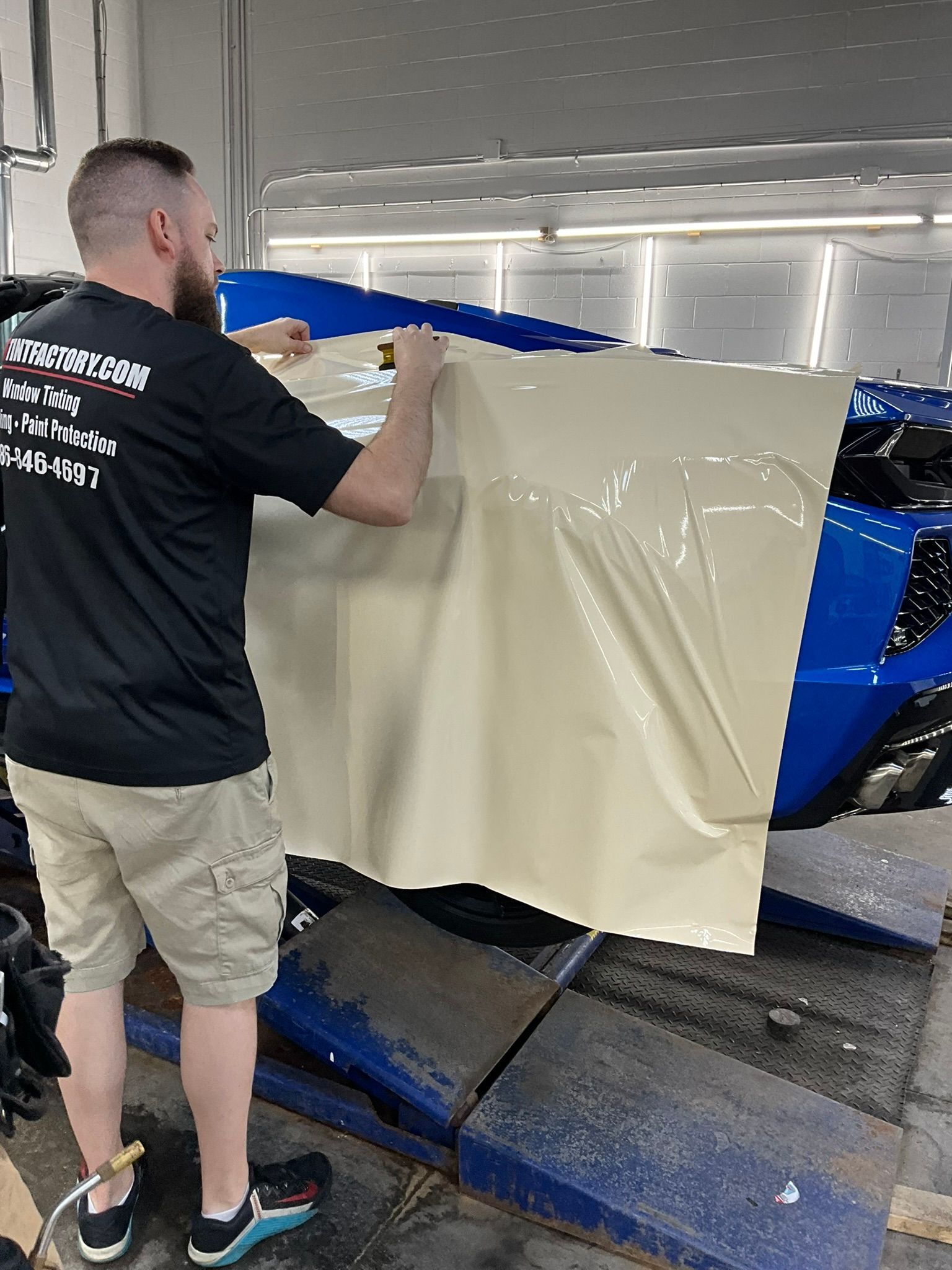
Man covering blue machinery with beige plastic sheeting in a workshop
By Shawn Winters June 1, 2025
When it comes to protecting your car’s paint, you have more options than ever before. Two of the most popular choices are Paint Protection Film (PPF) and Vinyl Wrap, but which one truly offers the best protection for your vehicle?
By Shawn Winters May 26, 2025
When it comes to window tinting, most people focus on how dark or stylish the film looks—but there’s more to it than just aesthetics. The percentage of your window tint plays a crucial role in how effective it is, how comfortable your ride feels, and ultimately, how much value it adds to your investment.
By Shawn Winters May 15, 2025
Water spots on a car’s surface can be frustrating, especially when you’ve invested in a ceramic coating to protect your paint.
By Shawn Winters May 15, 2025
Imagine driving your freshly detailed car through the rain, only to see water bead up and roll right off the surface. No water stains, no lingering grime—just a spotless, glossy finish.
By Shawn Winters May 9, 2025
When it comes to selling your car, every detail matters. Whether you’re trying to increase appeal, improve performance, or boost resale value, the choices you make today can impact how much you’ll get for your car down the line.
By Shawn Winters May 3, 2025
For any fleet manager, maintaining a large number of vehicles can be a constant challenge. Whether it’s ensuring the vehicles are operating smoothly or keeping them looking presentable, it’s no secret that the appearance of your fleet can impact your business’s image.
By Shawn Winters April 30, 2025
Your car isn’t just a mode of transportation—it’s an investment. Whether you drive it daily or keep it in pristine condition for resale, protecting its interior from wear and tear should be a top priority.
By Shawn Winters April 28, 2025
Your car’s paint isn’t just about looks—it’s the first line of defense against the elements. Sun exposure, road grime, bird droppings, and even improper washing techniques can dull its shine and lead to long-term damage.